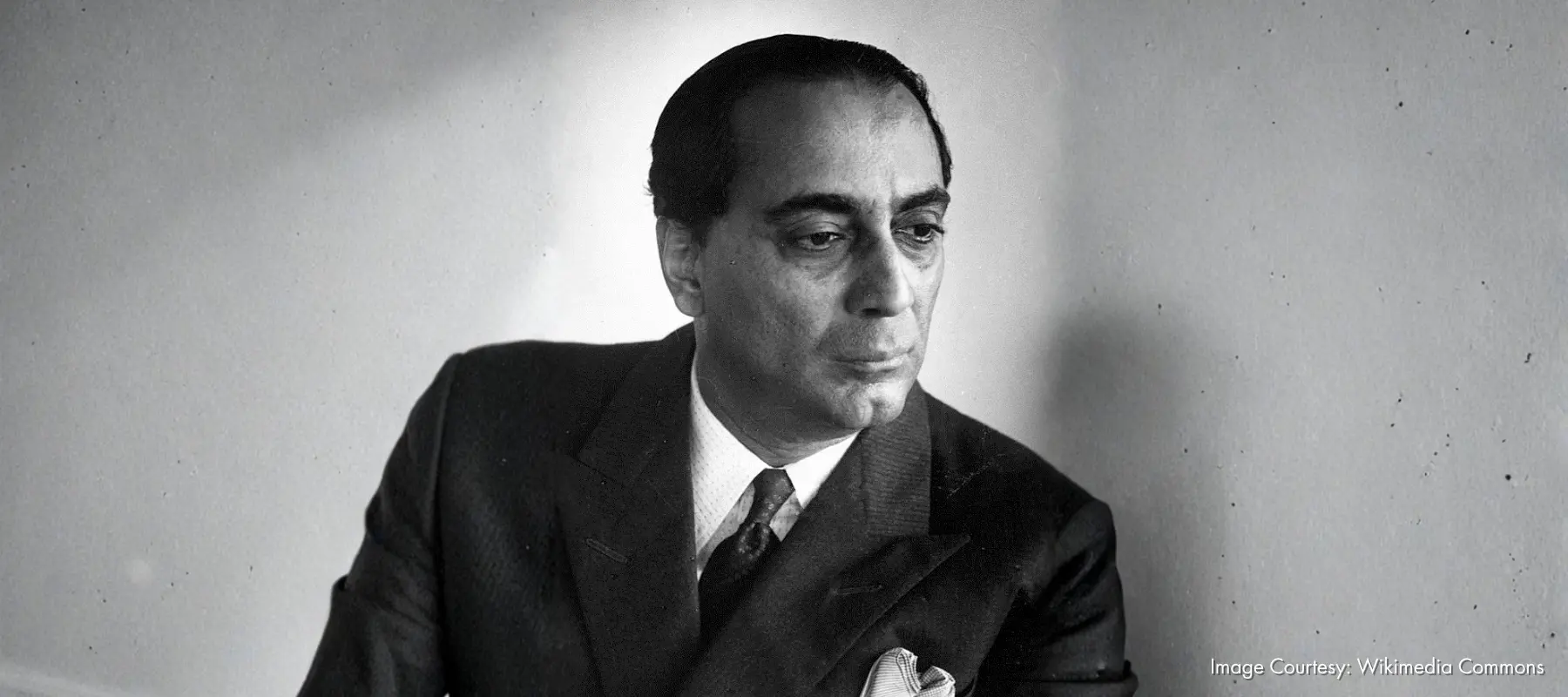
Homi Jehangir Bhabha’s story reads almost like a quiet revolution, one shaped not by rhetoric, but by intellect, ambition, and a profound belief in India’s scientific potential. Born in 1909 into a distinguished Parsi family in Bombay, Bhabha left for Cambridge to study engineering, only to discover a deeper calling in theoretical physics. His early research on cosmic rays positioned him among the world’s leading young scientists.
When he returned to India during World War II, he recognised a void. The country lacked institutions dedicated to advanced research. With characteristic foresight, he founded the Tata Institute of Fundamental Research in 1945, creating a sanctuary for Indian scientists to innovate at global standards. Soon after, he laid the foundations of the nation’s nuclear programme, establishing the Atomic Energy Establishment at Trombay and spearheading India’s three-stage nuclear power strategy, a masterstroke built around the country’s abundant thorium reserves.
As the first Chairman of the Atomic Energy Commission, Bhabha blended scientific brilliance with institution-building genius. His untimely death in 1966 ended a luminous life, but his legacy endures: he remains the architect of India’s atomic journey and one of the most influential scientific minds of modern India.