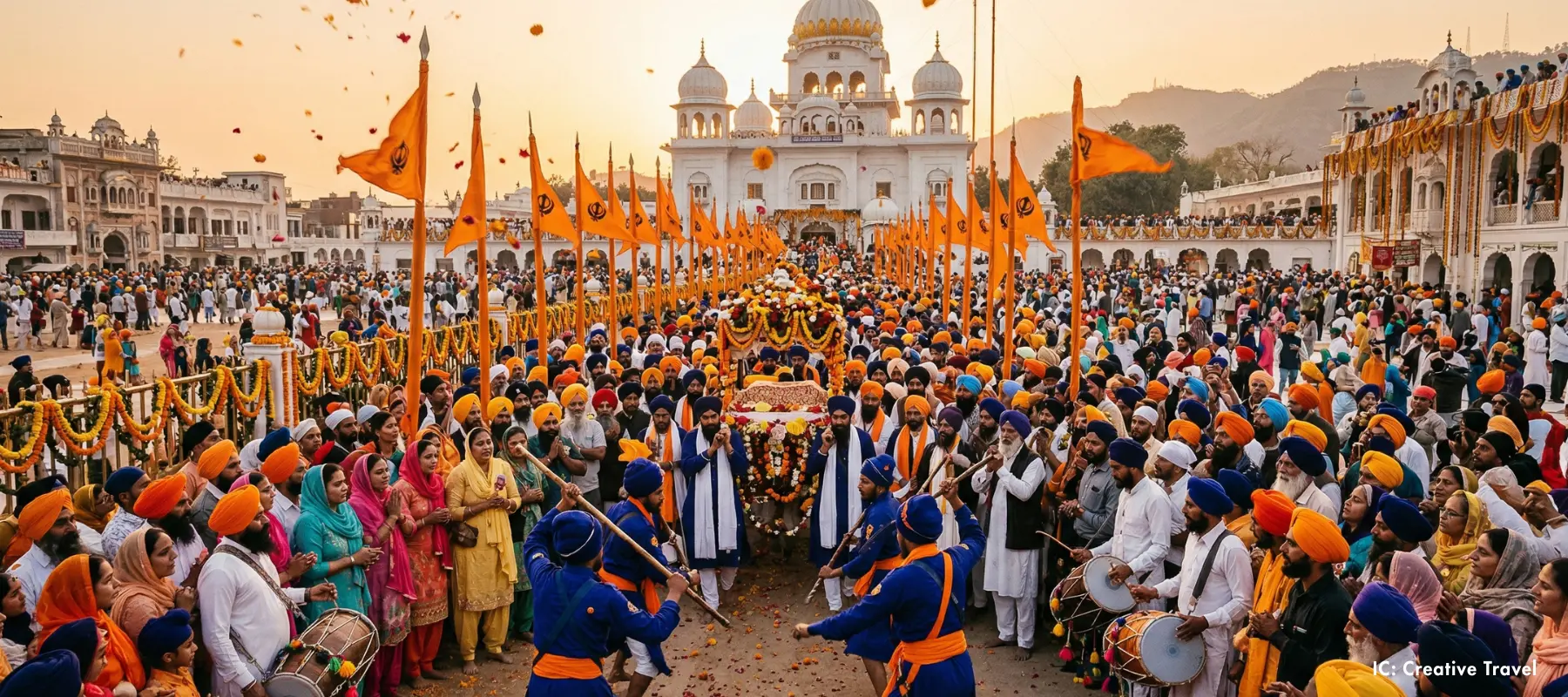
Few festivals in India hold as many threads at once as Baisakhi. On the same day each April, Punjab celebrates the wheat harvest, marks the Sikh New Year, and honours one of the most defining moments in Sikh history, the founding of the Khalsa by Guru Gobind Singh in 1699. That layering of joy, faith, and remembrance is what gives Baisakhi its particular depth.
At the Golden Temple in Amritsar, the day begins before dawn. Special prayers, unbroken scripture readings, and kirtan fill the air as thousands of devotees gather in the glow of the sacred complex. Nagar kirtan processions move through the streets, with floats, saffron flags, and displays of gatka martial arts drawing crowds at every turn.
In the villages, the mood shifts. Farmers celebrate the rabi harvest with bhangra and gidda dances in open fields, and fairs spring up across the countryside with food, music, and the particular exuberance of a community giving thanks. For visitors, Baisakhi offers something increasingly rare, a festival that is genuinely lived rather than performed, and all the more affecting for it.