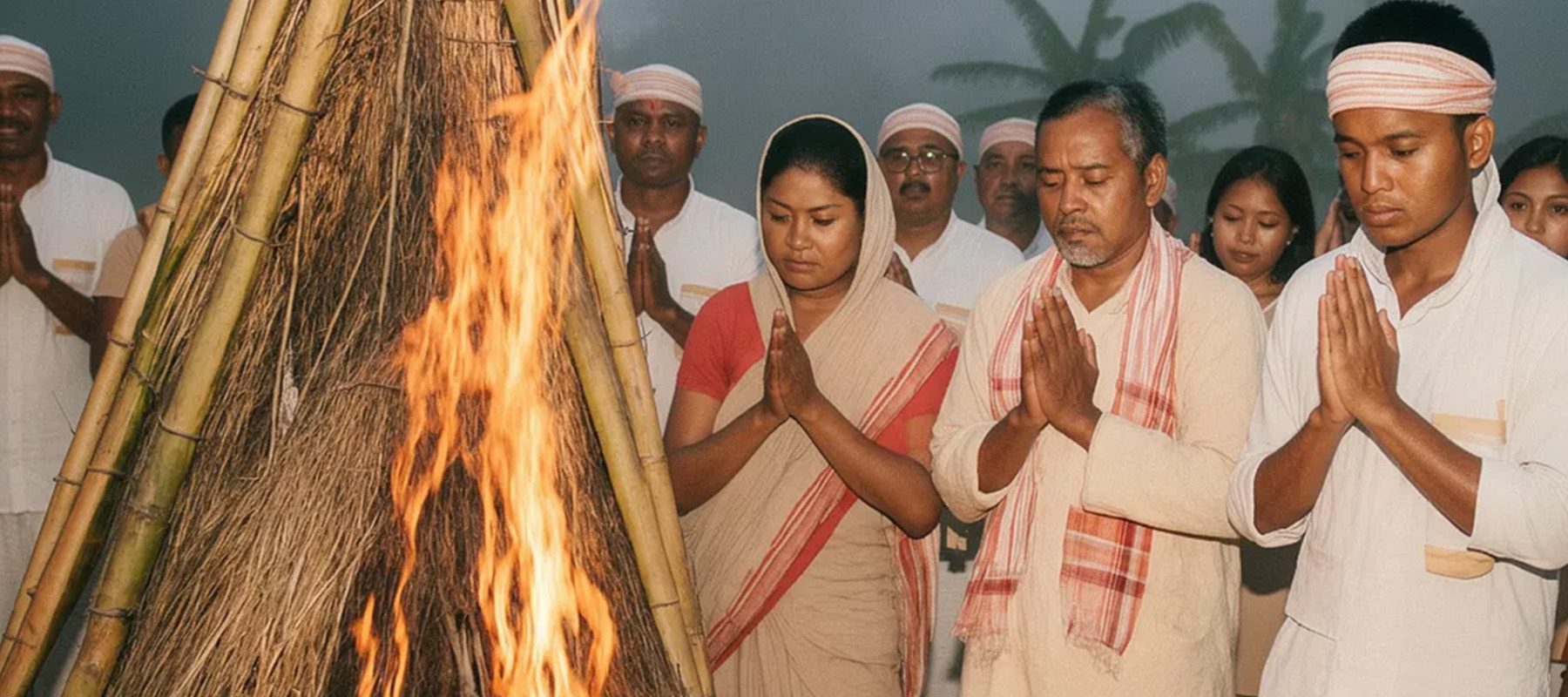
Magh Bihu arrives not with spectacle alone, but with warmth, of hearth fires, shared meals, and gratitude whispered to the land. Celebrated in Assam, this harvest festival marks the culmination of the agrarian year, when granaries are full and the soil is allowed a moment of rest.
Historically, Magh Bihu traces its roots to ancient agrarian practices of the Brahmaputra valley. Unlike other Bihu festivals tied to sowing or planting, Magh Bihu is about completion, a quiet celebration of abundance earned through labour. The word Magh comes from the Assamese month of Magh (January–February), while Bihu itself predates written history, believed to have origins in pre-Aryan fertility rites.
The heart of the celebration lies in Uruka, the eve of Magh Bihu, when families and communities gather by rivers or fields to cook elaborate meals together. Temporary huts made of bamboo and hay become communal kitchens, alive with laughter, storytelling, and the aroma of rice, fish, and jaggery.
At dawn, Meji bonfires are lit, with offerings of rice cakes and betel leaves consigned to fire, carrying prayers for prosperity skyward. The huts are then ceremonially dismantled, reminding everyone of life’s impermanence and renewal.
Magh Bihu is not loud. It does not ask for attention. Instead, it teaches something enduring: that gratitude is most powerful when shared, and abundance is richest when it brings people together.