Indian winters announce themselves quietly: through misted mornings, softened sunlight, and sweets that appear only when the air turns cold. These are not everyday indulgences. They are seasonal rituals, prepared with intention, shared with warmth, and remembered long after winter fades.
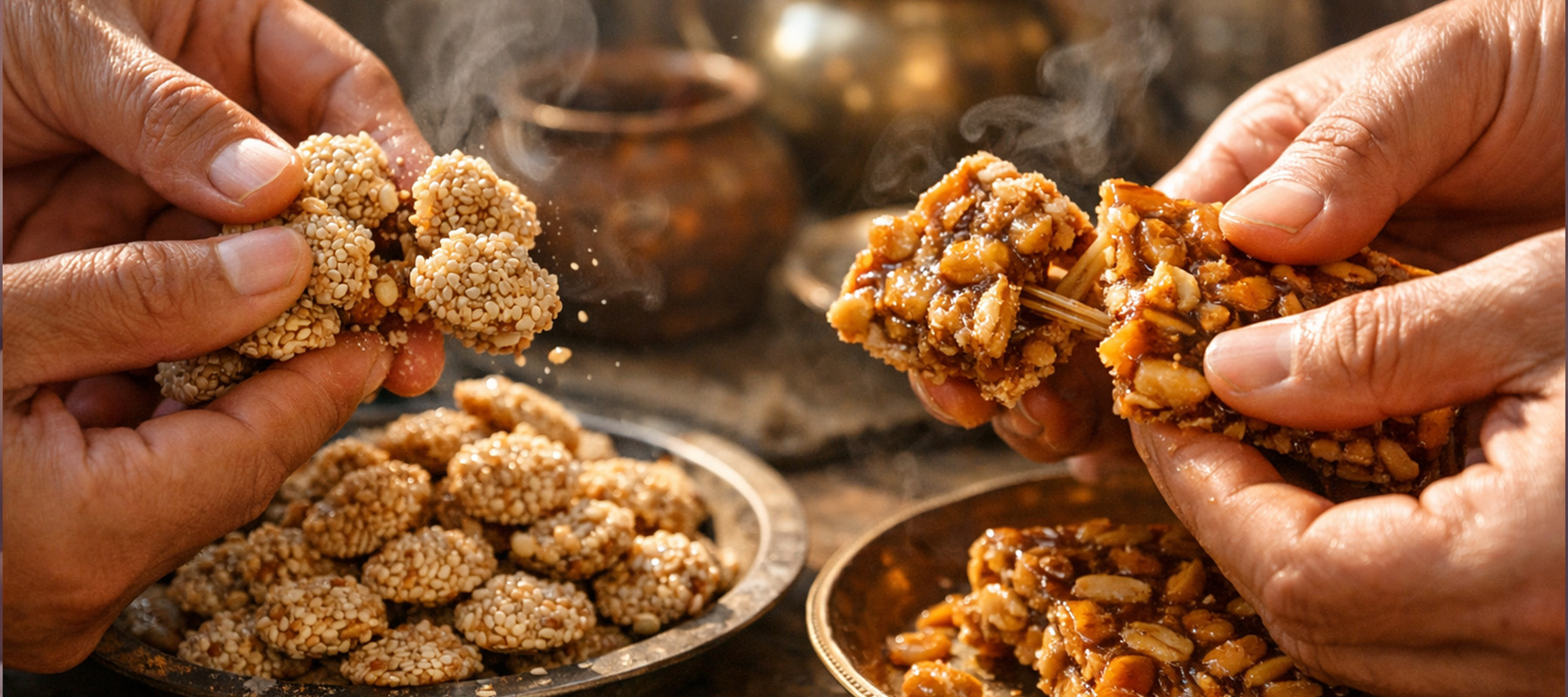
There is rewri, its pale sugar shell cracking open to reveal roasted peanuts and sesame– light, crisp, and celebratory. Beside it sits gajak, dense and golden, its jaggery binding sesame seeds into something sturdy enough to carry winter’s chill and generous enough to melt slowly on the tongue.
Then come the til laddoos, rolled by hand, warm with ghee and jaggery, small orbs of nourishment that feel almost medicinal in their comfort. In North Indian homes, pinni appears: rich, crumbly, and indulgent, made with whole wheat flour, edible gum, nuts, and ghee, designed to fortify the body against cold mornings and long nights.
Across regions, chikki, which is peanut or sesame brittle bound with jaggery, offers a simpler sweetness, while malpua, fried and soaked in syrup, brings softness and warmth to winter evenings, especially during festive days.
These sweets are more than desserts. Sesame (til) is naturally warming, rich in calcium, iron, and healthy fats. Jaggery (gur), unrefined and mineral-rich, aids digestion and strengthens immunity. Ghee nourishes and grounds. Together, they reflect a deep understanding of seasonal eating, one that modern nutrition is only now rediscovering.
Traditionally exchanged during festivals like Lohri, Makar Sankranti, and Magh Bihu, these winter treats also carry symbolism. Sesame signifies continuity and longevity; jaggery represents sweetness in speech and life. To offer them is to offer goodwill, health, and quiet affection.
In a time of year that encourages slowing down, these sweets remind us that winter, in India, has always been meant to be tasted.