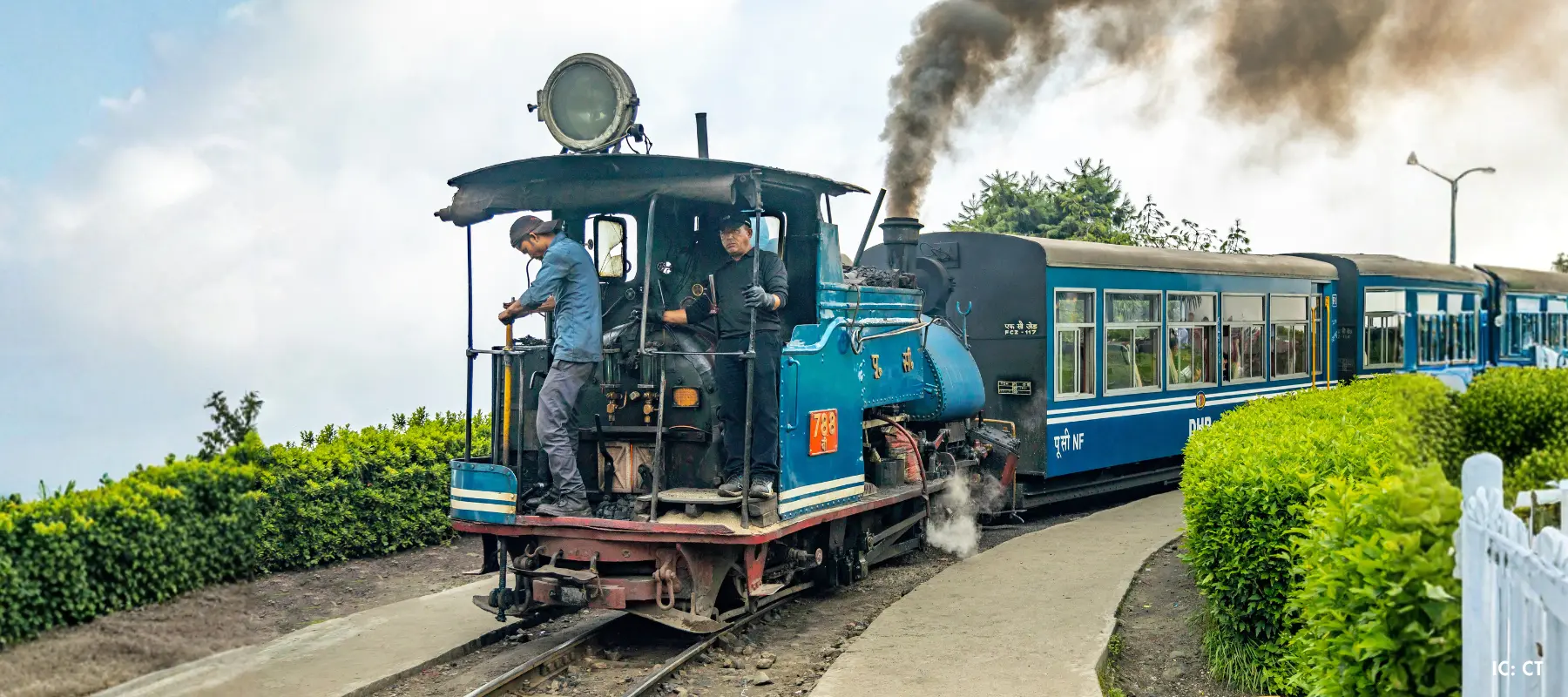
The Darjeeling Himalayan Railway has done something remarkable in its 142-year history. It has never been busier. In the 2025-26 financial year, the iconic narrow-gauge railway recorded 215,432 passengers, up from 183,003 the previous year, a jump of nearly 18 per cent. Revenue climbed alongside it, rising from Rs 2.21 crore to Rs 2.53 crore.
The turnaround traces back to a deliberate shift in strategy after the pandemic. Rather than depending on government subsidies, the DHR moved toward becoming self-sustaining, introducing upgraded services while restoring vintage steam engines and colonial-era coaches. The balance between modernisation and preservation appears to have struck exactly the right note with travellers.
This summer, four new Joyride services will run along the Darjeeling-Ghoom route, and a heritage service between New Jalpaiguri and Tindharia is expected to launch before the year ends. British-era steam locomotives will also return to the misty hillside tracks for the season. For a railway that began in 1881, the momentum feels anything but old.