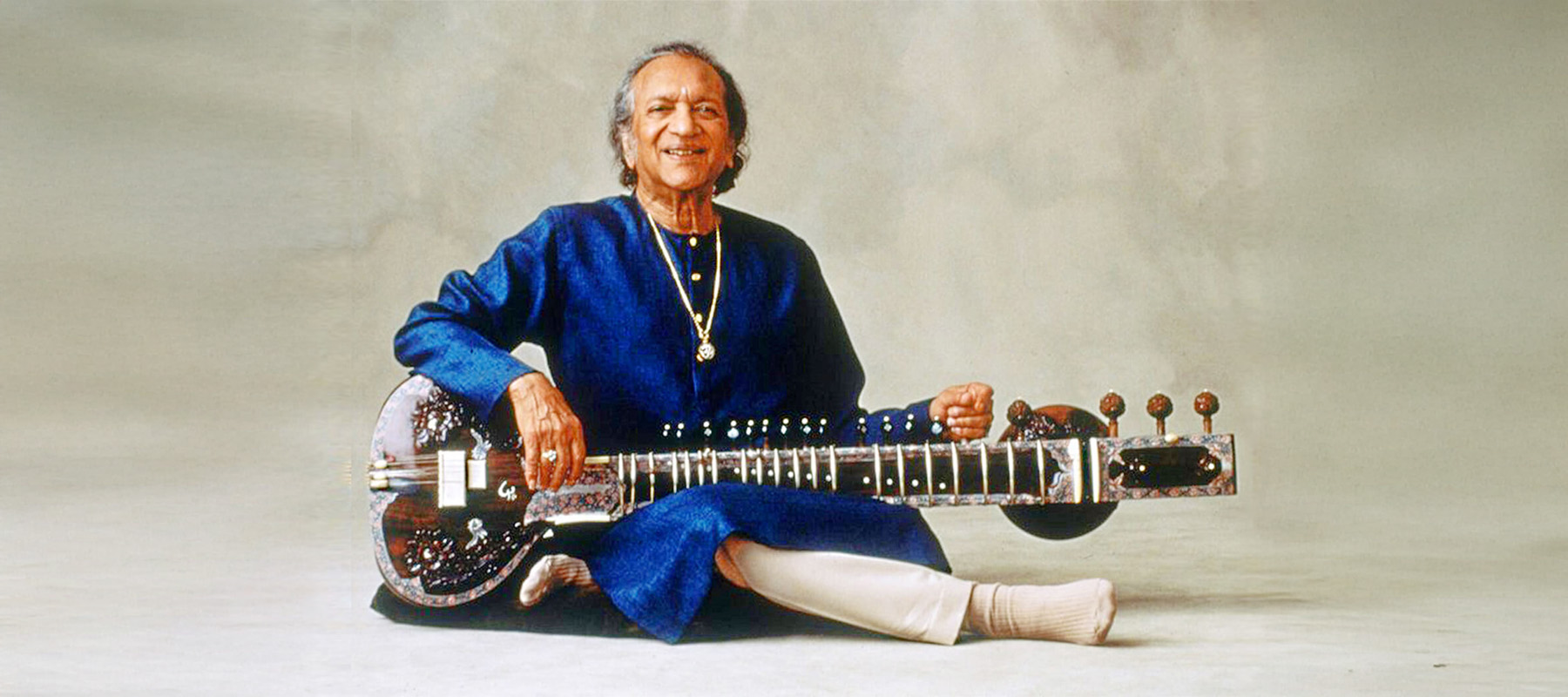
Some artists perform. Others translate cultures.
Pandit Ravi Shankar did something truly rare: he carried the soul of Indian classical music across borders, languages, and generations, without diluting its depth.
Born in 1920 in Varanasi, Ravi Shankar’s early life was shaped by travel and tradition. After years of performing abroad as a dancer, he returned to India to study under the legendary Ustad Allauddin Khan, embracing the discipline of the guru-shishya parampara.
His mastery of the sitar was not technical alone; it was philosophical. He believed music was a spiritual pursuit, capable of elevating consciousness. This belief resonated globally during the 1960s, when his collaborations with Western musicians, most notably George Harrison of The Beatles, introduced Indian classical music to entirely new audiences.
Yet, Shankar remained deeply rooted. He composed for films, wrote concertos for sitar and orchestra, and performed at prestigious platforms, from Woodstock to the United Nations. His work earned him multiple Grammy Awards, the Bharat Ratna, and global reverence.
For Indians around the world, Ravi Shankar represents more than excellence. He is proof that cultural integrity can travel unchanged, unwatered, and still universally understood.