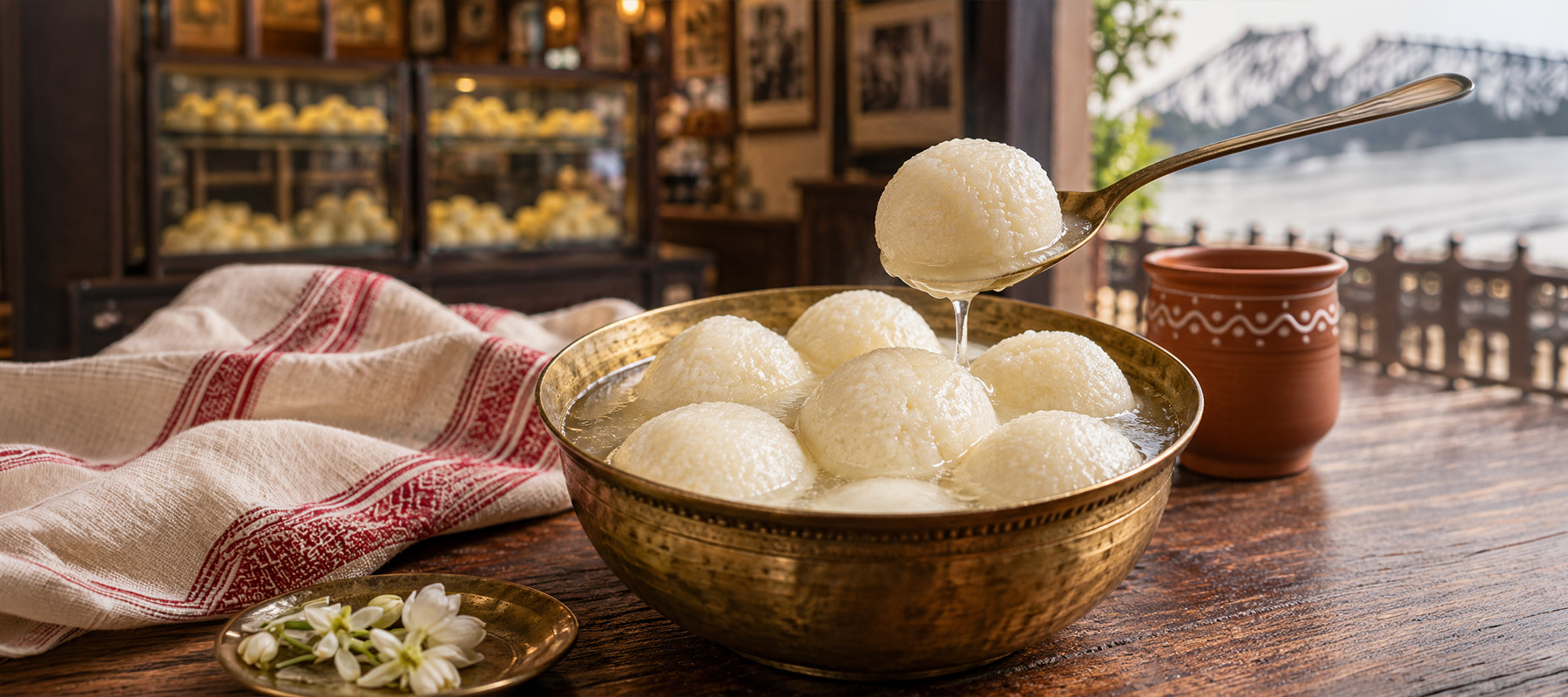
Soft, snowy white and soaked in a delicate sugar syrup, Rosogolla is one of eastern India’s most recognisable sweets. Simple in appearance yet surprisingly distinctive in texture, it has become closely associated with Bengal and its rich tradition of mishti—the Bengali word for sweets.
Rosogolla is made from chhena, a fresh cottage cheese prepared by curdling milk. The chhena is kneaded until smooth, shaped into small balls and gently cooked in sugar syrup. The result is light, spongy and juicy, releasing a burst of sweetness with every bite.
Its history, however, is almost as interesting as the sweet itself. Both West Bengal and Odisha have long-standing traditions connected with versions of Rosogolla. In Odisha, Rasagola is linked to centuries-old temple customs, particularly the Niladri Bije ritual associated with Lord Jagannath in Puri. Bengal, meanwhile, is widely associated with the development and popularisation of the soft, spongy version familiar across India today.
In Kolkata, confectioner Nobin Chandra Das is traditionally credited with refining this style of Rosogolla in the 19th century. Its popularity quickly grew beyond Bengal, eventually becoming a household favourite across the country and an enduring symbol of Bengali confectionery.
Today, Rosogolla is enjoyed everywhere from heritage sweet shops and festive gatherings to family celebrations and everyday meals. For travellers, tasting one freshly served in Bengal is more than a dessert experience—it is a small introduction to the region’s culinary history, traditions and enduring love affair with sweets.