Centuries ago, Guru Rinpoche, revered as the Second Buddha, crossed into Bhutan and wove Buddhism into its mountains through sacred dance, subduing evil spirits and blessing the land with his teachings. In the 1670s, Gyalse Tenzin Rabgye, the fourth Desi of Bhutan, sought to honour that legacy and established the Thimphu Tshechu as a lasting tribute, a festival born from gratitude to the saint who shaped the nation’s soul.
Tshechu means “day ten,” for these festivals unfold around the tenth day of the lunar month, when Guru Rinpoche’s deeds are said to have unfolded. In the 1950s, the third King, Jigme Dorji Wangchuck, enriched the tradition with additional mask dances, deepening its colour without diminishing its devotion.
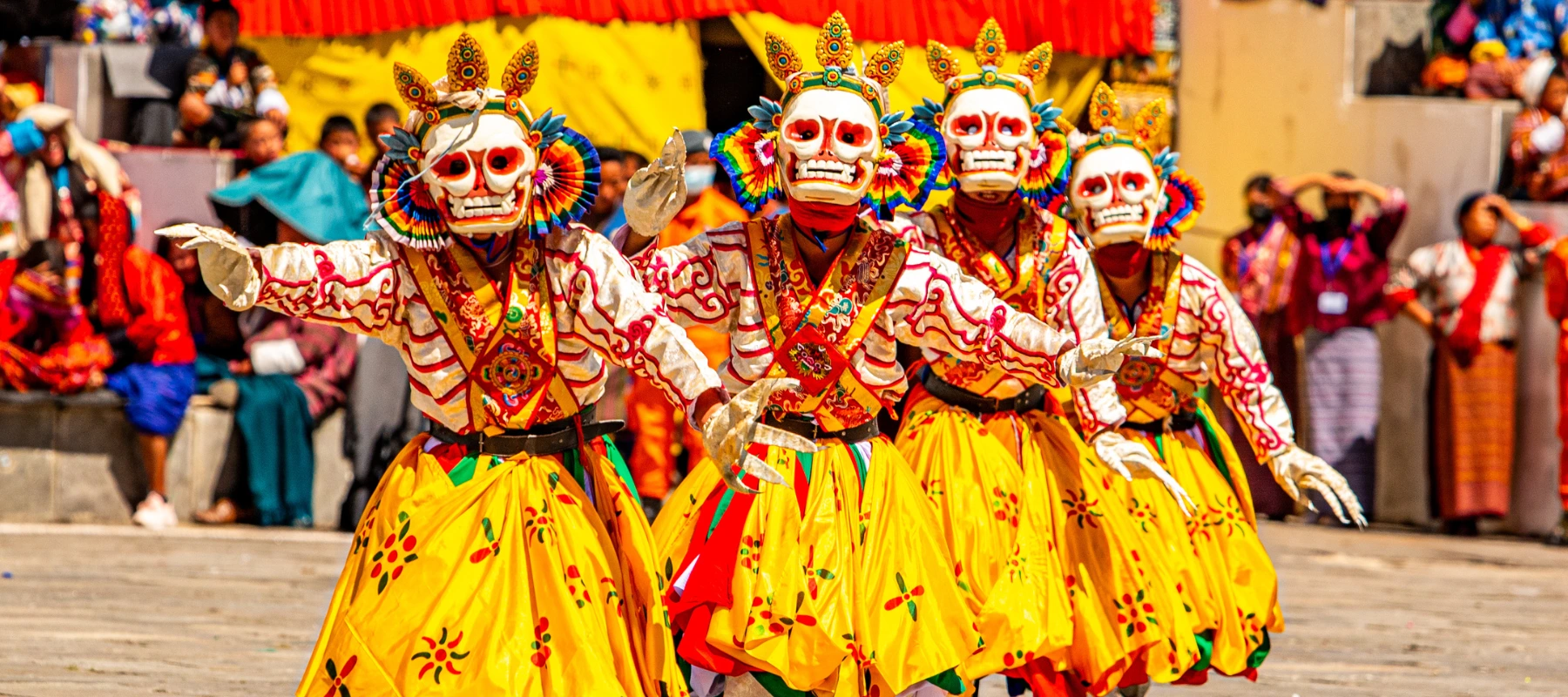
Held each autumn at Thimphu’s Tashichho Dzong, the three-day festival transforms the courtyard into a realm of myth. Monks in elaborate masks and costumes perform cham dances retelling ancient legends, while locals gather in their finest gho and kira, believing attendance itself brings merit and blessing.
For the traveller, it is a rare window into a kingdom that still measures its days by faith, and a reminder that some celebrations are less performance than prayer.