Durga Puja arrives with a sense of anticipation—ceremonial, vibrant and deeply rooted in devotion. Celebrating Goddess Durga’s victory over the demon Mahishasura, the festival honours the timeless triumph of good over evil and the power of the divine feminine.
The celebrations begin with Mahalaya, an auspicious invocation that marks the symbolic arrival of the goddess. In the quiet hours of the morning, devotional recitations of the Chandi Path fill homes and temples, creating an atmosphere charged with reverence and expectation.
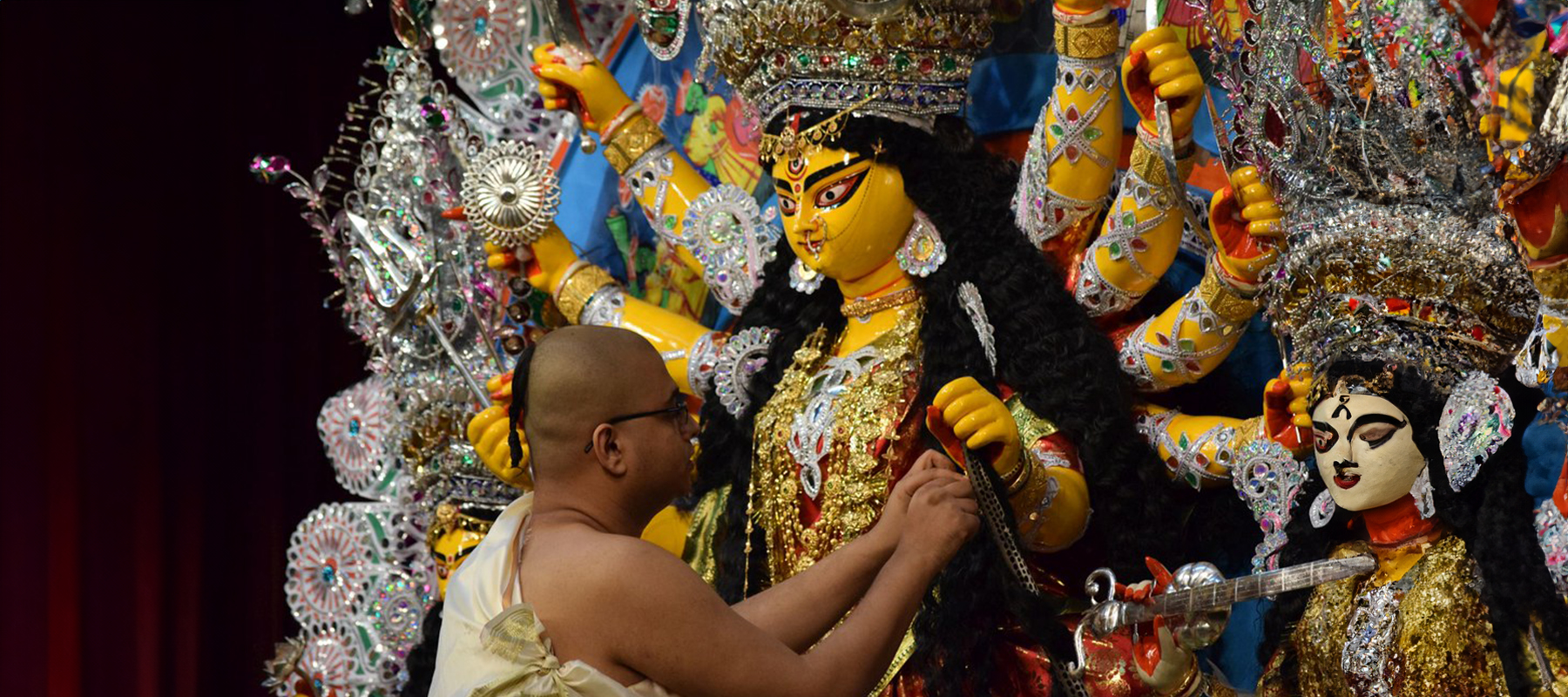
Over the days that follow, cities—most famously Kolkata—undergo a remarkable transformation. Elaborately designed pandals rise across neighbourhoods, each one a temporary temple and a work of art in its own right. Skilled artisans create striking idols of Durga, often accompanied by Lakshmi, Saraswati, Ganesha and Kartikeya. Some pandals draw inspiration from mythology and tradition, while others explore contemporary themes through architecture, sculpture and visual storytelling.
Pandal-hopping becomes both a social ritual and a cultural journey. Streets remain alive well into the night as families, friends and visitors move from one installation to another, discovering new interpretations of faith and creativity at every turn.
The spiritual intensity reaches its peak during Saptami, Ashtami and Navami. Devotees gather for Anjali, offering flowers in prayer, while the fragrance of incense and dhuno fills the air. The unmistakable rhythm of the dhak—the traditional drum of Durga Puja—echoes through the streets, lending the festival its powerful pulse. Ritual and celebration come together seamlessly, creating moments that are both deeply personal and shared by entire communities.
On Vijayadashami, the mood shifts from celebration to farewell. Married women traditionally take part in Sindoor Khela, applying vermilion to the goddess and to one another before the idols are carried in procession for immersion. The departure is emotional yet hopeful, accompanied by the belief that Durga will return again the following year.
Food is an essential part of the experience. Community feasts serve steaming bhog, while sweets, regional delicacies, fish preparations and festive snacks become part of the celebrations. Dining, devotion and gathering are closely intertwined, turning the festival into a sensory experience as much as a spiritual one.
Across India, Durga Puja coincides with the culmination of Navaratri and Dussehra, connecting Bengal’s traditions with a wider season of celebration. While some regions dance through the nights with Garba and Dandiya, others mark the victory of Lord Rama over Ravana, all reflecting the same underlying themes of renewal, courage and the triumph of good.
Durga Puja is at once prayer, pageantry, craftsmanship and community. For a visitor, it is far more than a festival to observe—it is an experience to step into, where devotion takes the form of art, drums become a collective heartbeat, and even the final farewell carries the promise of return.