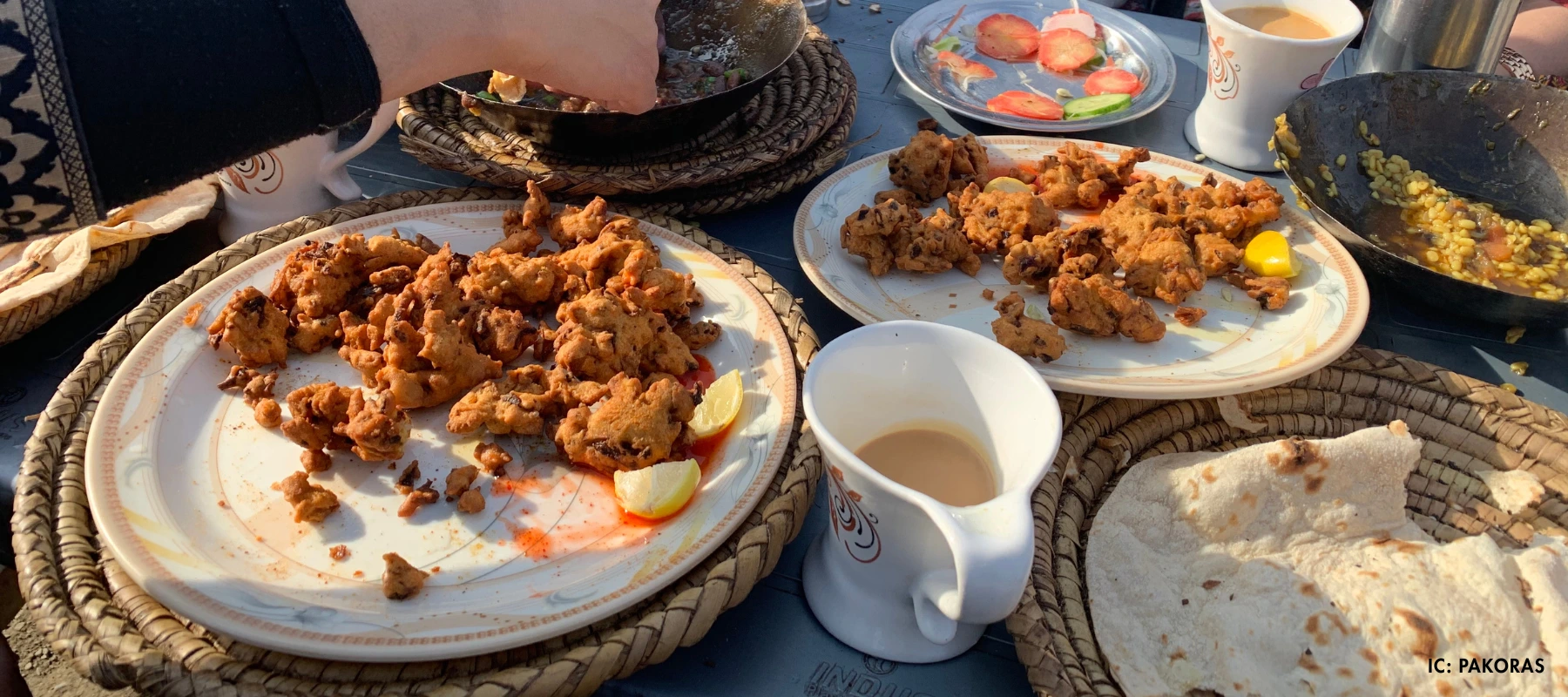
Long before it had a name in English, the pakora existed as pakvavata in Sanskrit texts, a compound word meaning simply “cooked lump.” Early traces appear in Sanskrit and Tamil Sangam literature: round cakes of lentil or vegetable fried in oil, described in verses over a thousand years old. What began as a humble mention in ancient food writing eventually became something far bigger, a snack that would find its way into nearly every Indian home.
There is no single pakora. There is Punjab’s besan-battered onion, Gujarat’s potato bhajia, Maharashtra’s simple bhaji, and the Bengali beguni made from eggplant. The constant is gram flour, water, and spices like turmeric, chilli, and sometimes ajwain, wrapped around vegetables and dropped into hot oil until golden. What changes is regional instinct, what a household happens to have, what the season brings.
Its real home, though, is the monsoon. Rain against a window, a plate of hot pakoras, a cup of chai. It’s less a recipe than a memory, passed down without ever being written on paper.
For a country of a thousand cuisines, pakoras remain one of the few things almost everyone agrees on.